

A MULTI-FACETED
APPROACH
Yau Lab employs a number of complementary approaches to characterize behavior and investigate nervous system function.
Psychophysics
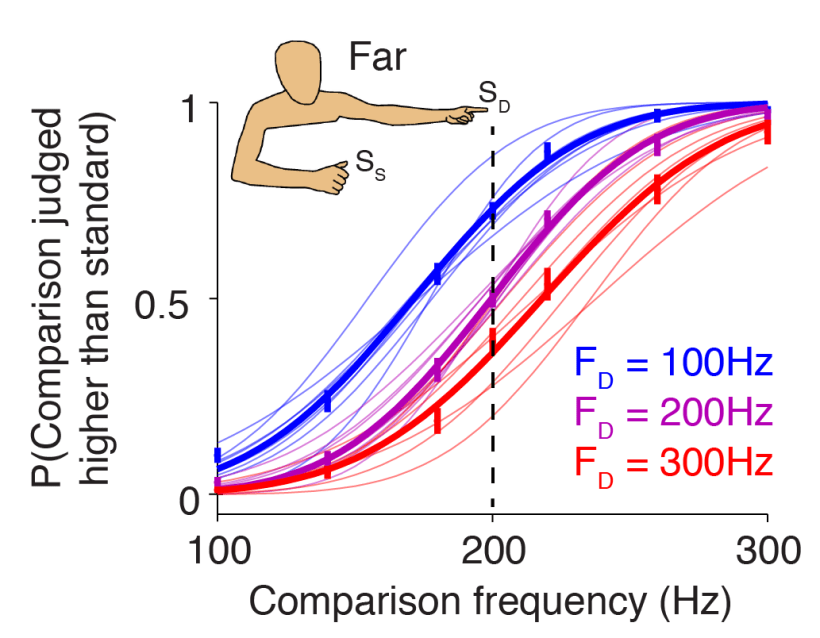
In careful behavioral studies, we quantify how observers perceive and judge sensory cues. For example, in one experiment we used behavioral perception data and psychometric curves to show that vibrations felt on one hand can modulate how a person perceives an vibration on the other hand. You can read more about this study here.
Modeling

To infer the computations the nervous system may implement to support sensorimotor behavior, we develop quantitative models to relate sensory cues to behavior and cortical activity.
Neurophysiology
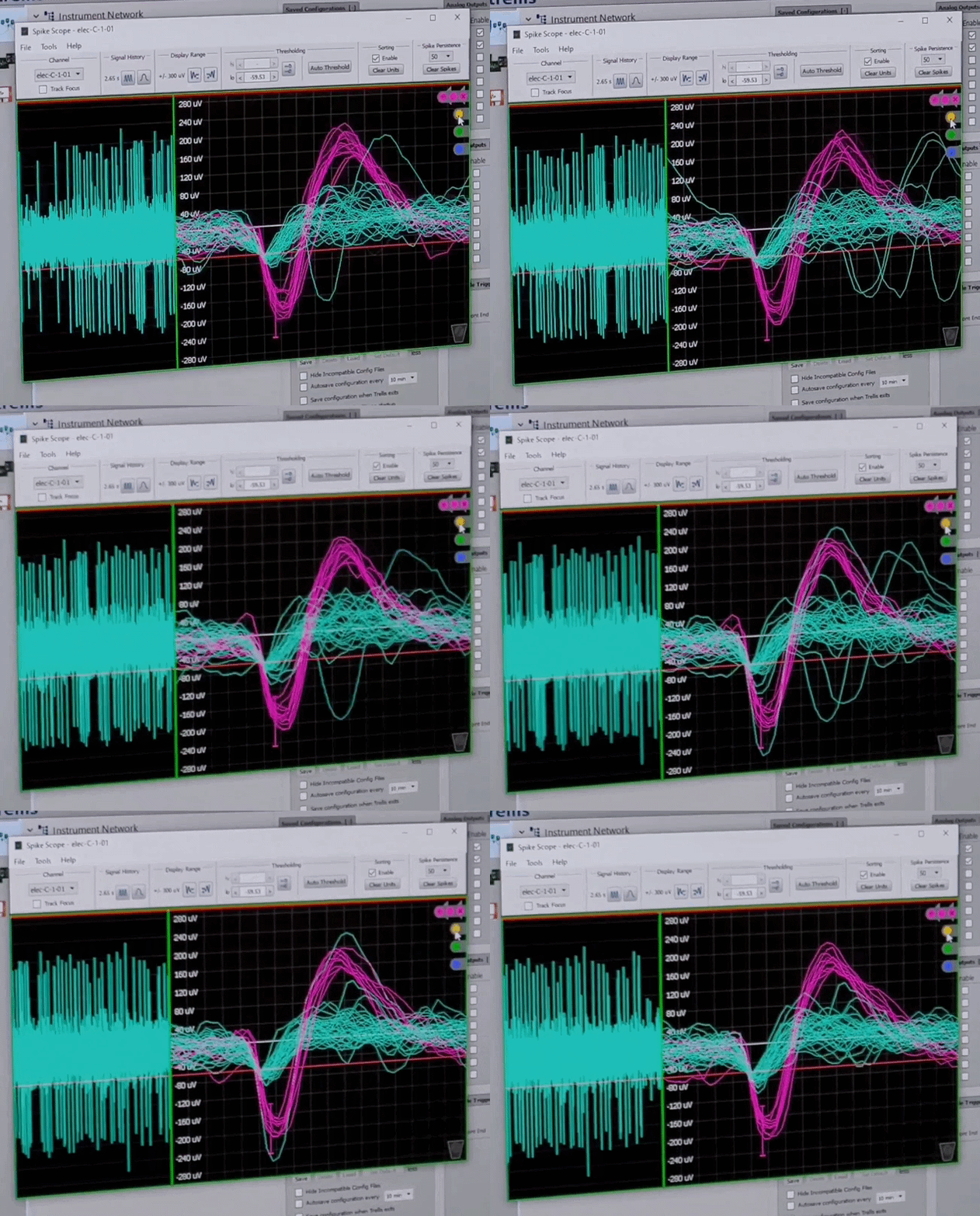
Recording spiking activity from single neurons and local field potential from neural populations allows us to establish how sensory cues are encoded and transformed in the nervous system.
Neuroimaging
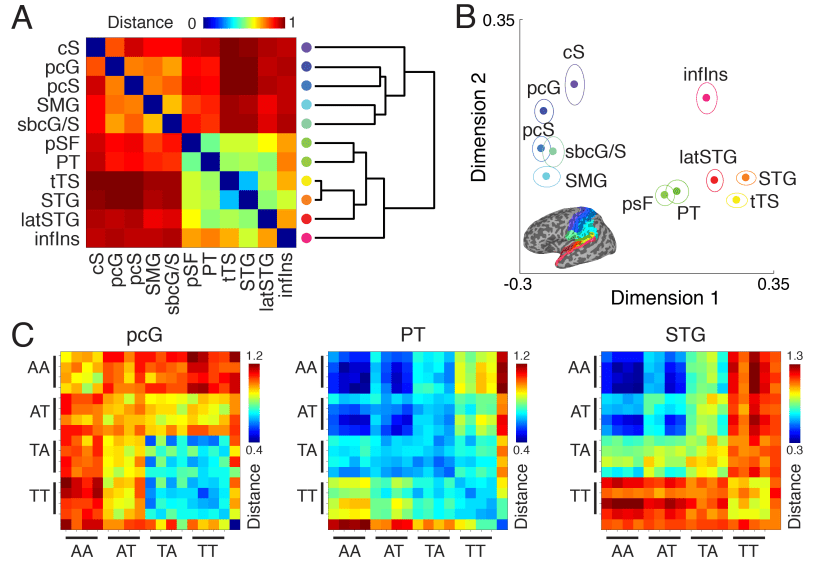
Non-invasive measurements of BOLD signal changes allow us to identify brain regions whose activity is associated with sensorimotor processing. Computational neuroimaging approaches enable us to predict brain response patterns and test hypotheses for population-level response properties.
Non-invasive Brain Stimulation
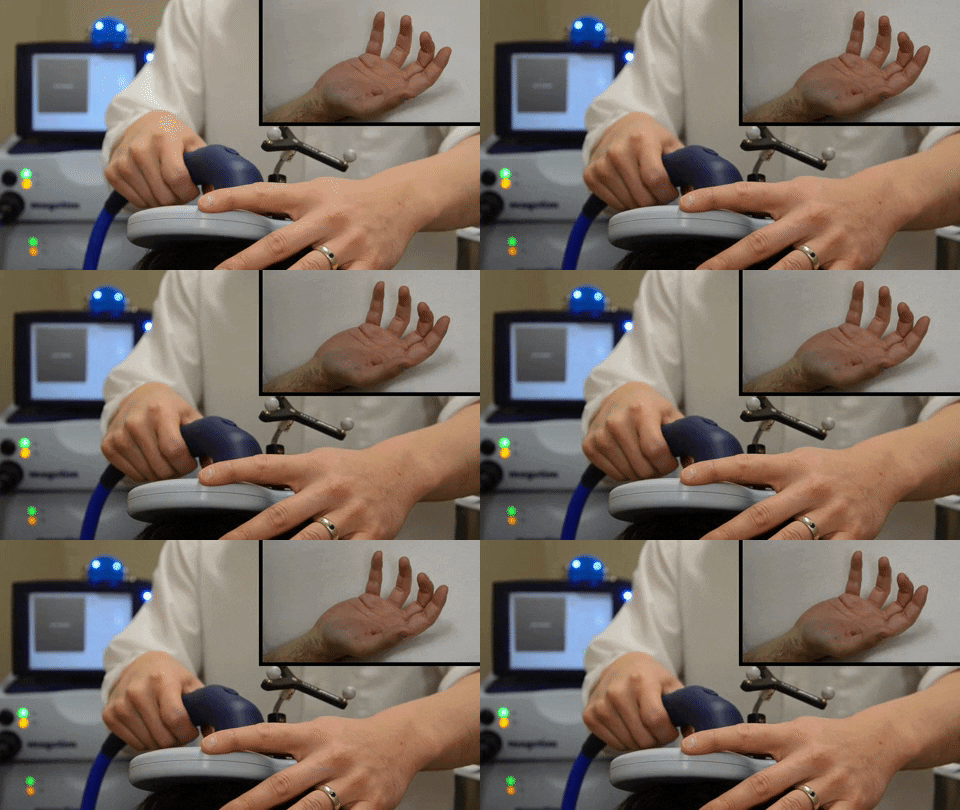
Manipulating brain activity using transcranial magnetic stimulation (TMS) allows us to probe the functional contributions of brain regions. In this video, you can see how applying magnetic stimulation to the somatosensory cortex results in automatic movement at the fingers.
Simultaneous TMS-fMRI
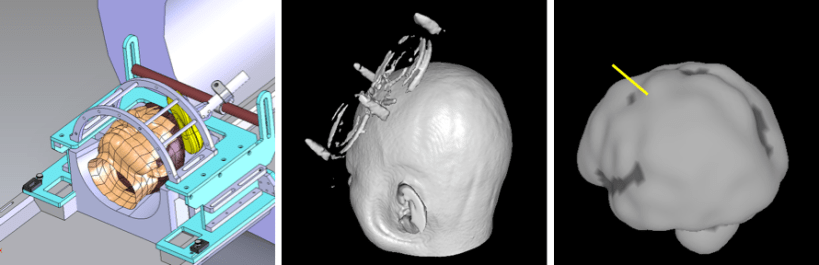
Applying TMS pulses during fMRI brain scans allow us to characterize and visualize the distributed consequences of targeted brain stimulation. Read more about this methodology here.
Virtual Reality
Performing experiments in virtual environments provides unique opportunities to manipulate sensory cues, activate sensory illusions, and learn more about how the brain processes virtual sensations. Read more about VR methods here.
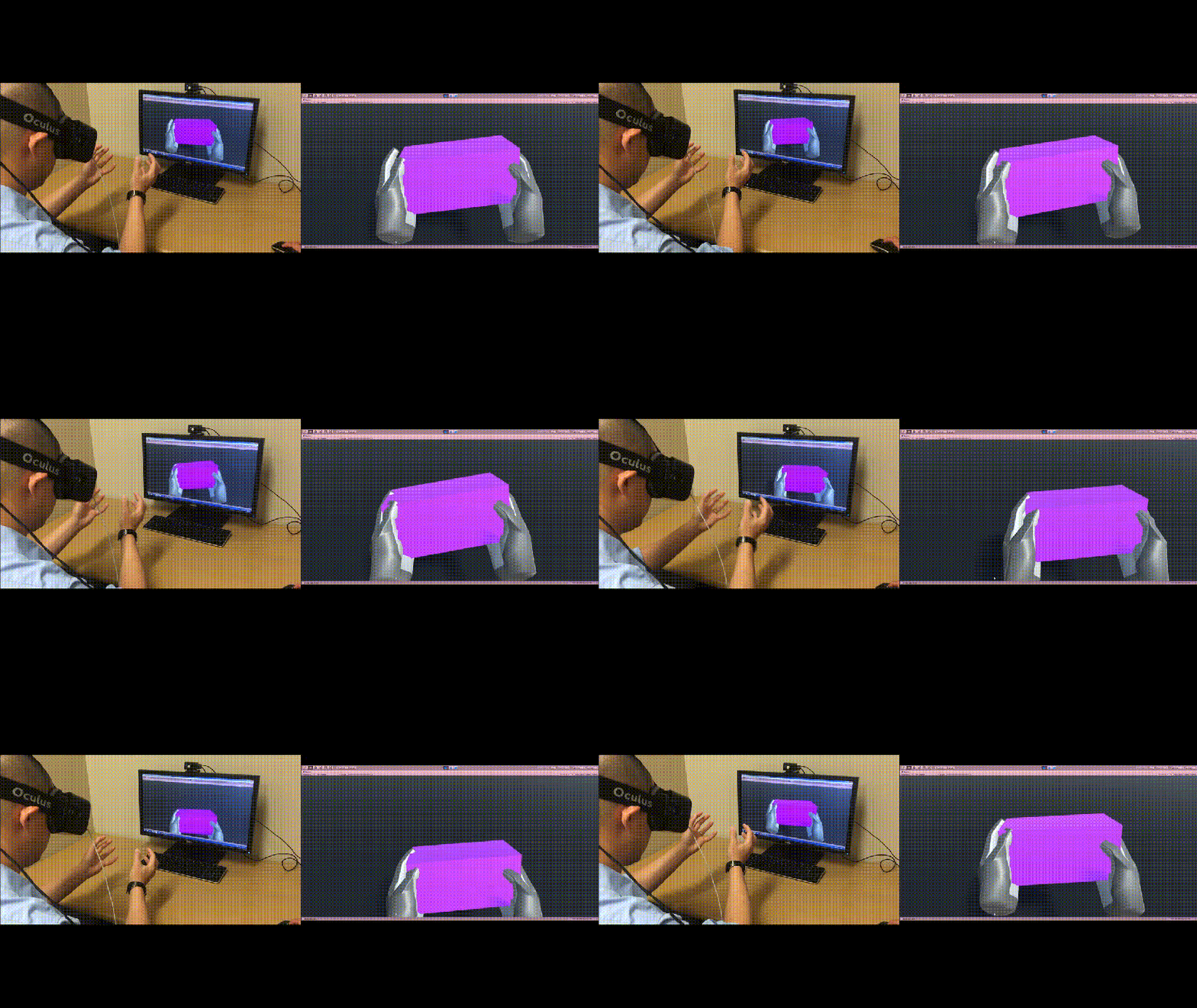
Motion Tracking

Cutting edge methods for estimating and tracking limb and eye movements provide detailed characterizations of sensorimotor performance during natural behaviors. These eye-hand tracking methods have helped us learn the role of visual inputs during tactile tasks. Learn more here.
Non-Human Primate Training
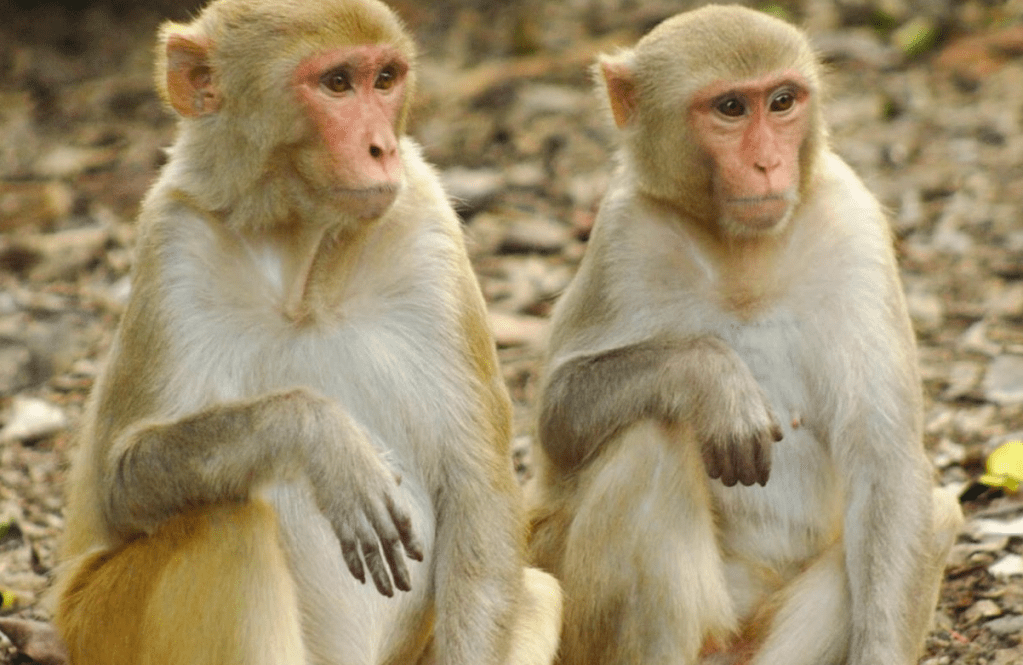
Training perceptive behaviors in non-human primates, measuring the neuronal feedback, and analyzing the data using advanced modeling provide insight into connections within the brain. See an example of our research with non-human primates here.
 YAU LAB